
Bioprinting/生物打印
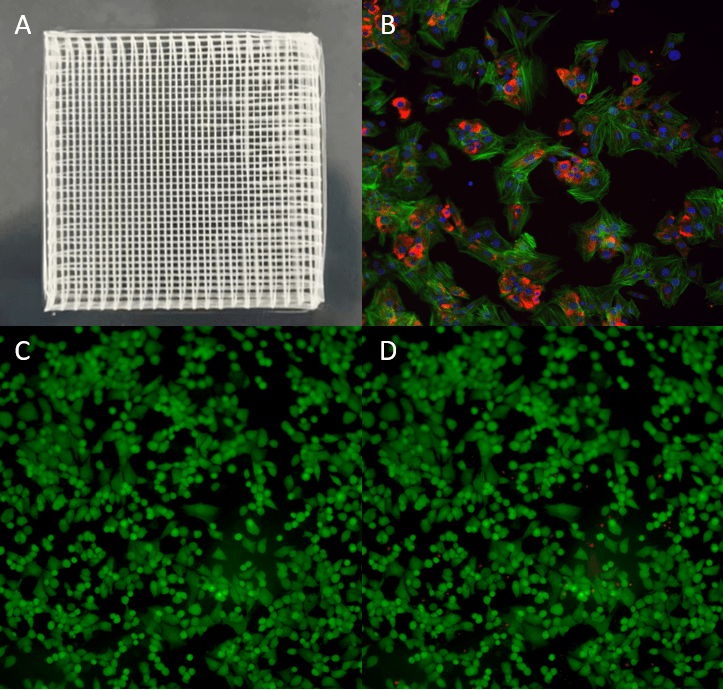
A:通过静电纺丝 3D 打印软骨细胞支架;B:软骨细胞原代培养及鉴定;C-D:凝胶包裹后PI染色
3D-Printed Electrospun Cartilage Cell Scaffolds This study utilizes electrospinning and 3D printing to create cartilage cell scaffolds, achieving macroscopic shaping and microscopic structural control. It focuses on minimally invasive harvesting of ear cartilage cells while maintaining their differentiation and proliferation, ultimately constructing an active cartilage implant based on an interpenetrating network.
3D打印的静电纺丝软骨细胞支架 本研究通过静电纺丝 3D 打印软骨细胞支架,实现宏观塑形和微观结构调控,基于微创采集耳软骨细胞及保持分化增殖,构建基于互穿网络的活性软骨植入体。
Food Printing 食品打印
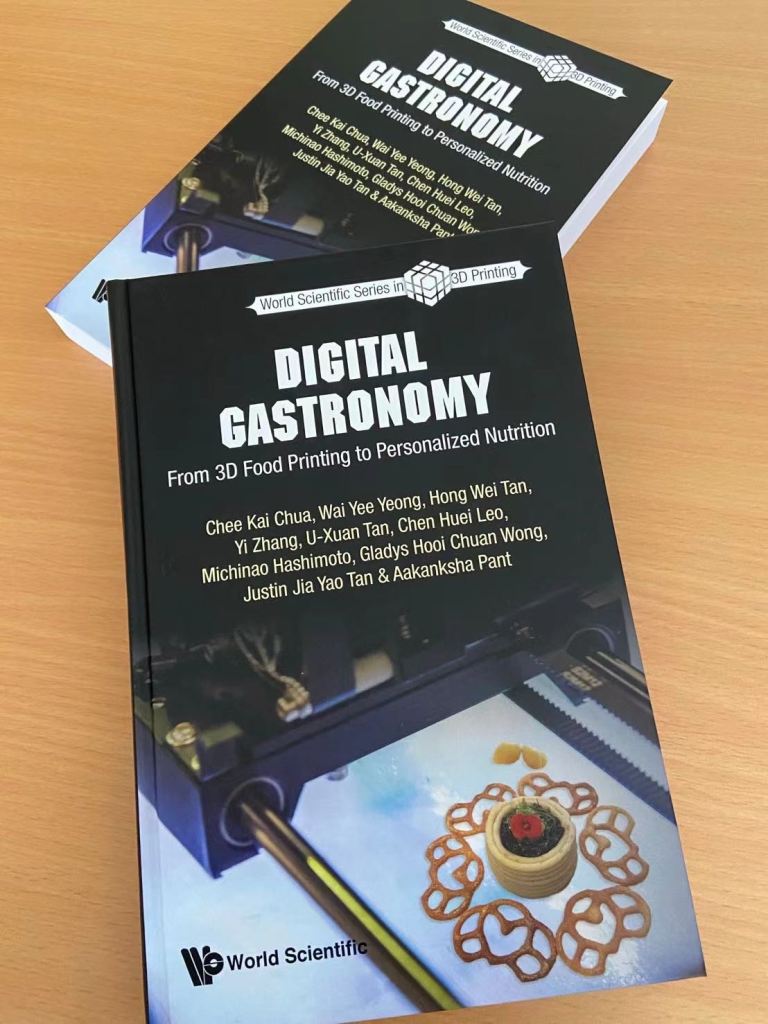
C.K. Chua, W.Y. Yeong, H.W. Tan, Y. Zhang, U-X. Tan, C.H. Leo, M. Hashimoto, G.H.C. Wong, J.J.Y. Tan, A. Pant, Digital Gastronomy-From 3D Food Printing to Personalized Nutrition, World Scientific, DOI: 10.1142/12824, ISBN: 978-981-125-590-8 (Hardcover), ISBN: 978-981-125-740-7 (softcover), ISBN: 978-981-125-660-8 (ebook)

3D-printed Chinese New Year sticky rice cake. 3D打印春节年糕。

Dual nozzle prints customized food for diabetics 双喷头打印糖尿病人定制食品
Achieving personalized nutrition for patients with diabetic complications via 3D food printing,International Journal of Bioprinting,2024,2424-7723

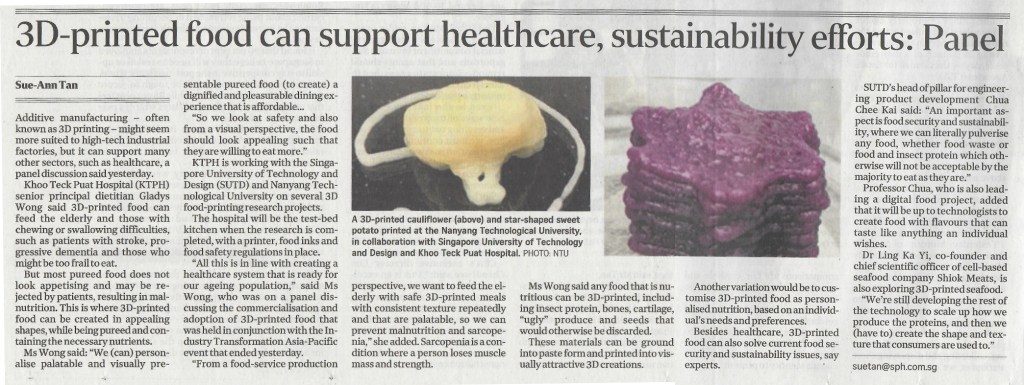
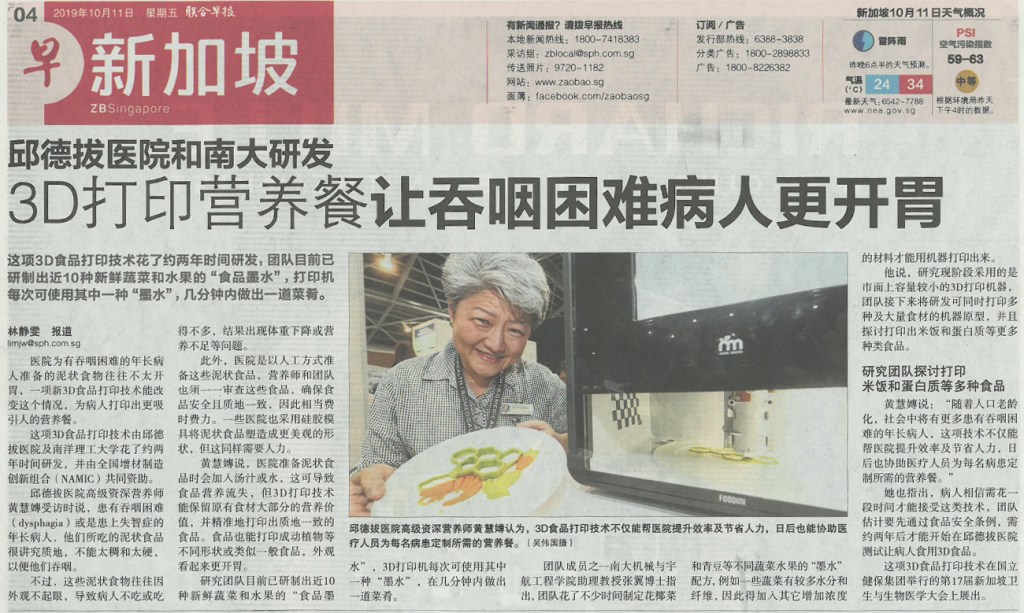
3D printing of fresh vegetables. 新鲜蔬果3D食物打印。
3D Food printing of fresh vegetables using food hydrocolloids for dysphagic patients, Food Hydrocolloids, 2021, 114, 106546
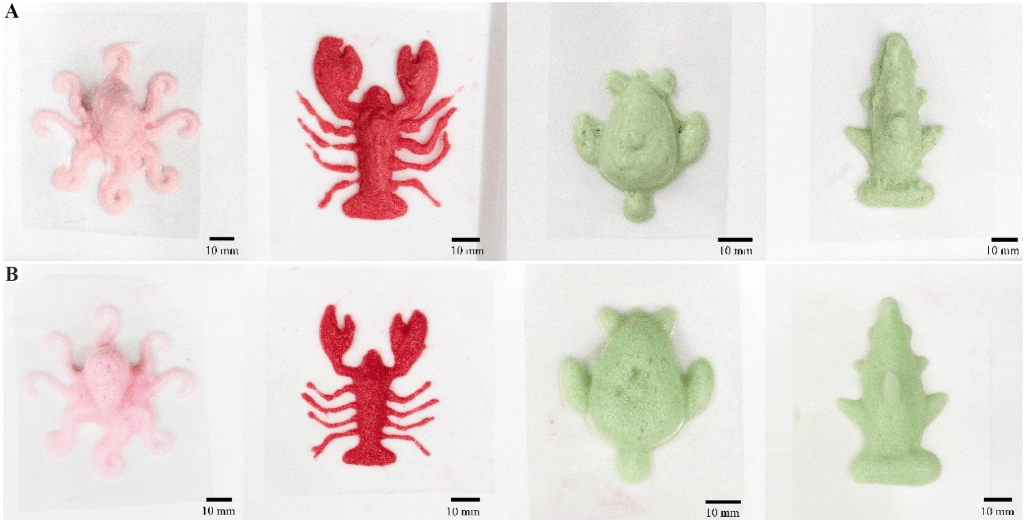
3D printing of food foam for hydration in dysphagia.
为吞咽障碍患者3D打印补水食品泡沫。
Three-Dimensional Printing of Food Foams Stabilized by Hydrocolloids for Hydration in Dysphagia, International Journal of Bioprinting, 2021, 7, 158-168.

3D printing of alternative proteins. 3D 打印替代蛋白质。
Systematic Engineering approach for optimization of multi-component alternative protein-fortified 3D printing food Ink, Food Hydrocolloids, 2022, 131, 107803
3D Printing of Medical Equipment
3D 打印医疗设备

3D printed modular magnetic digital microfluidic platform for in vitro diagnostics.
3D打印模块化磁性数字微流体平台用于体外诊断。
A 3D-printed modular magnetic digital microfluidic architecture for on-demand bioanalysis, Microsystems & Nanoengineering, 2020, 6, 48

3D printed parallel magnetic digital microfluidic platform for the detection of carbapanemase-producing enterobacteriaceae.
3D 打印并行磁性数字微流体平台用于检测碳青霉烯类抗生素耐药菌。
A 3D-printed magnetic digital microfluidic diagnostic platform for rapid colorimetric sensing of carbapenemase-producing Enterobacteriaceae, Microsystems & Nanoengineering, 2021, 7, 47

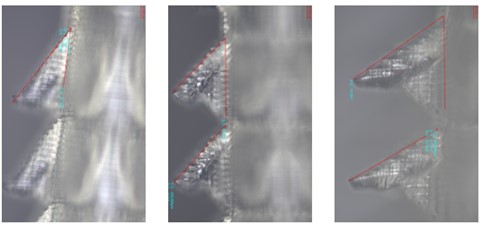
a.3D-Printed Barbed Microneedles at Different Angles 3D打印不同角度的倒刺 b.Barbed Structures Under Microscopy 微针显微镜下的倒刺结构
Wound Management System Based on 3D Printing with Downward Barbed Microneedles
The research objective is to develop a wound management system based on 3D printing with downward barbed microneedles, capable of real-time detection of human wound impedance and controlled drug delivery via a microcontroller minimum system using a piezoelectric micro-pump. The sterile dressing helps alleviate pain from wounds and accelerates healing. However, tearing off the dressing before the wound has completely healed may lead to secondary infection of the wound. Previous studies have shown that skin impedance decreases after infection due to the formation of biofilms, and skin impedance increases as the wound heals. This biosignal can be captured by sensors embedded in wearable devices, providing real-time information about the wound and creating opportunities for autonomous diagnosis and drug delivery in a closed-loop manner. Traditional wet electrodes are susceptible to environmental interference and are not suitable for long-term monitoring of wound impedance. Microneedles can minimally penetrate the skin without damaging the dermal structure, showing great potential in recent years for transdermal drug delivery, disease diagnosis, and bioelectrical signal detection. Microneedle electrodes can penetrate the stratum corneum, significantly reducing contact impedance and maintaining long-term stability of impedance. Therefore, the integration of microneedle-based monitoring and drug delivery devices provides a solution to the aforementioned problems.
基于3D打印带有向下倒刺微针的伤口管理系统
本研究目标是基于3D打印带有向下倒刺微针的伤口管理系统,能实时检测人体的伤口阻抗并通过单片机最小系统控制压电微泵递药。无菌敷料贴有助于缓解人体伤口疼痛并加速愈合,而当伤口没有完全愈合时撕开敷料可能会导致创面二次感染。先前的研究表明,由于生物膜的形成,感染后皮肤阻抗会降低,随着伤口愈合,皮肤阻抗会增加。该生物信号可通过嵌入在可穿戴设备中的传感器捕获,提供关于伤口的实时信息,创造了以闭环方式自主地诊断和治疗递药的机会。传统的湿电极易受环境干扰不适用于长期检测伤口阻抗,微针能够以最小侵入性扎入皮肤且不损伤人体的真皮结构,其近年来在透皮递药、疾病诊断、生物电信号检测等领域显示出巨大的潜力。微针电极可以穿透皮肤角质层,大大降低接触阻抗,并保持阻抗的长期稳定性。因此,基于微针的监测与递药一体化装置为决上述问题提供了一种解决方案。
 Yi Zhang 张翼